

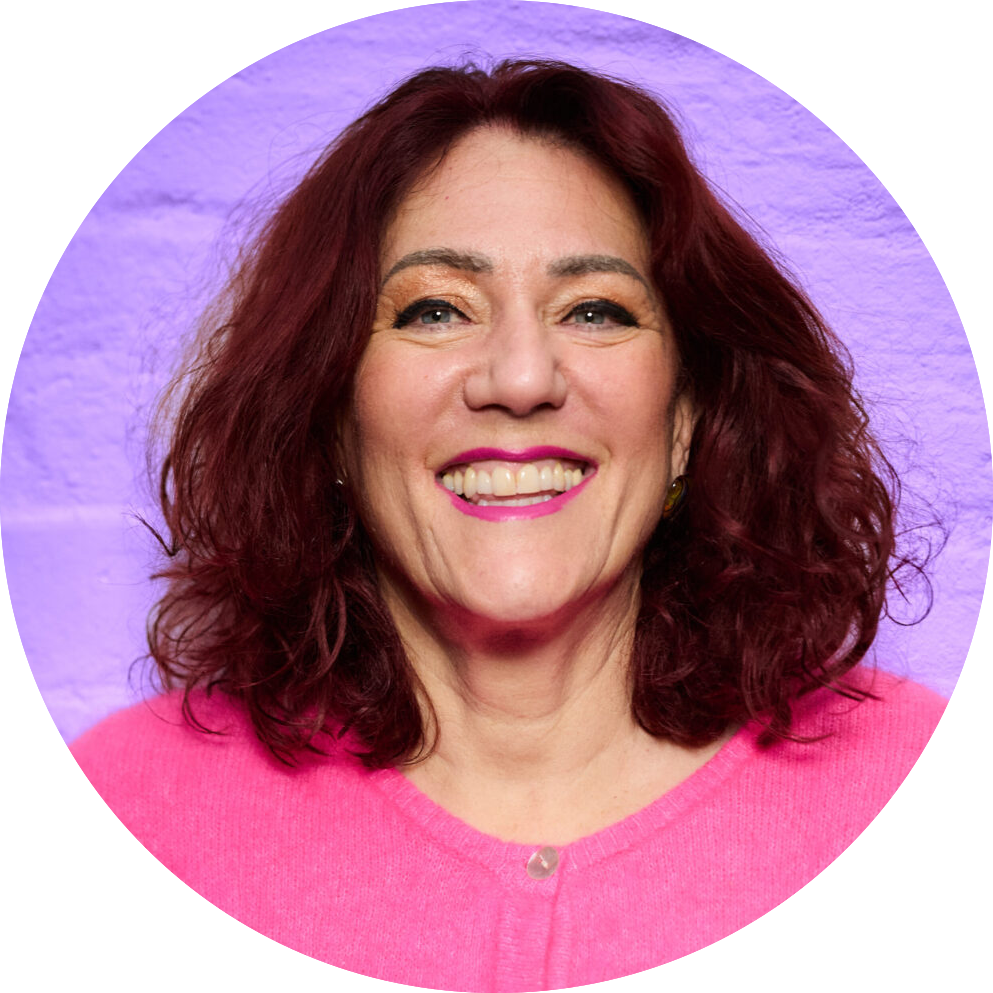
 Yvonne Eskenzi set up Eskenzi PR from her house in Barnet in September 1995, with no clients and no contacts in the industry. Thirty years on, she and her husband Neil run one of the most respected PR agencies in the sector.
I talked with her about the December she nearly gave up, why she would never have stood out in a less brutal industry, what AI is and isn’t allowed to touch at her agency, and the uncomfortable truth about how agencies get treated when a client changes leadership.
How did you end up running a cybersecurity PR agency?
I came into PR sideways. I was temping after leaving university when my boss heard me pitch a journalist from The Times, badly, and moved me onto selling stories. A few years later, I was running exhibitions at News International and loving it, but after Neil and I took a year off to travel, I knew I didn’t want to work for anyone else again. So I set up Eskenzi with no plan, beyond seeing what would happen.
The first three months were close to nothing. By December, I was sitting in a cold, rainy house in Barnet, sobbing, ready to take a secretarial job at £7.50p an hour because I’d convinced myself the whole thing had failed. Two weeks after that meltdown, a woman I used to work with at News International rang. She was running a new IT security show and the PR agency on it was hopeless. She asked if I’d help. I didn’t know what IT security even was. She had to show me a computer virus over dinner to explain it, and I remember thinking it was the most boring thing I’d ever heard. I said yes anyway.
We got a front page piece in the FT within the first year or two, a top ten of what people needed to know about IT security, and nothing about that formula has changed since. Once that story ran, exhibitors at the show started coming to me directly. The first one to pay me properly was a Swedish company called PointSec. That’s when Neil gave up accountancy, which he hated, to handle the technical side from home, and that’s when Eskenzi became a proper business rather than me on the phone from the kitchen.
What’s got you through the hard years, and what would you tell someone starting out?
I’ve never had sales forecasts or growth targets in my head. As long as the bills were covered, the kids were fine, and we were enjoying the work, that was success to me. We grew through both recessions I’ve lived through, while a lot of the industry contracted. COVID was the one time it fell off a cliff overnight, business just disappeared in a week, the same as it did for everyone else.
The other thing I’d tell my daughters, who are in this industry now too, is don’t feel you have to swim in the same direction as everyone else. If I’d gone into fashion or food PR, I’d have been surrounded by people who were naturally cooler and more dynamic than I, and I’d have blended in. In cybersecurity, being colourful and a bit different made me stand out, because almost nobody wanted to be in cybersecurity PR. Nobody else wanted the job I ended up loving, so there was no competition for it.
Where did the idea for the Unsung Heroes Awards come from?
From the people. I’d say 95% of the people I’ve met in cybersecurity have been phenomenal, and some of my closest friends came from walking the aisles at InfoSecurity or RSA. Ray Stanton, who was CISO at BT, and Robert Coles, who worked at AstraZeneca and National Grid, are two of them. We’re still seeing people like that socially, decades on.
One of the biggest characters I ever met was Colonel John Doody, who’d come out of GCHQ and effectively became the human face of the organisation. He was the first person I met on the show floor the year we launched, and he stayed a close friend until he died last year in his eighties. I also think about Scott Crawford, an analyst who recently left the firm he was at and still can’t bring himself to stop writing about the industry, because he loves the people in it too much.
That’s part of why we set up the Unsung Heroes Awards and the Most Inspiring Women in Cyber Awards. Being a CISO is a thankless job. It’s a bit like working in insurance. If nothing goes wrong, nobody notices you’re doing well, and the only time anyone pays attention is when something breaks, which often isn’t even your fault.
We once ran a survey on how many security leaders had left a wedding or a family event because of a breach, and the number was enormous. At one of our awards, a CISO came off stage in tears and told me that in twenty five years in the job, his own wife and kids had never understood what he actually did, and that this was the first time he’d felt seen for it. That stayed with me.
How has cybersecurity PR changed since you started?
Less than people think, and more than people think, depending on which part you’re looking at.
What hasn’t moved is that good, honest content still wins, and people still buy from people. My job thirty years ago was finding a real story and a client willing to talk about an issue rather than just pitch their product, and that’s still the job now. If a client asks me to go and tell everyone their product is the best thing on the market, I still say no, because nobody wants that story, and it isn’t true anyway.
What has changed is the sheer number of places that the story can go. In the old days, you had maybe sixty journalists and a handful of magazines, and Thursday meant Computer Weekly landing on the mat and going up on the wall. Now it’s like opening a fan with a hundred different slats, from websites and podcasts, to video and social. Nobody knows quite which one to bet on. We run regular sessions with clients just to compare notes on what’s working. Eighteen months ago, everyone was talking about Demand Generation. Now it’s GEO, and we’re rewriting how we approach content again.
People predicted exhibitions would die, particularly once Reed launched a digital version of Infosecurity Europe just before COVID. It didn’t happen. In-person events are doing better than ever, because people still want to be in a room with people. I think the same will end up being true of well-written, clearly human content. Our trade title, the IT Security Guru, is getting more traction than ever.
Where does AI fit into how you work?
It’s brilliant for getting past a blank page. I use it constantly for that. What I won’t do is let it write anything, because it takes all the personality out. My own writing has quirks and a voice, and AI smooths that away every time I’ve tried it.
A journalist I know, Rob Wall, told me he’s bombarded with AI-generated pitches, can spot them instantly, and throws almost all of them straight in the bin. Nobody at Eskenzi writes with AI for that reason. We use it to get started, but everything that goes out is written and shaped by a person.
More importantly, AI can’t originate anything. It can’t run a survey, commission research, or come up with a genuinely new data point; it can only work with what already exists. Eskenzi has always been known for original research, and that’s the part of the job I’d never want to give up. We’re the ones creating the thing that gets used afterward, not the other way round.
Yvonne Eskenzi co-founded Eskenzi PR with her husband Neil in 1995. The agency has represented cybersecurity companies across the UK and US for three decades and runs the Unsung Heroes Awards and the Most Inspiring Women in Cyber Awards.
ABOUT BORA
We’re Bora. We work with security companies to turn complex technical capabilities into clear, credible market narratives.
Get in touch for a free 30 minute consultation. If we’re not the right fit, we’ll help find someone who is.